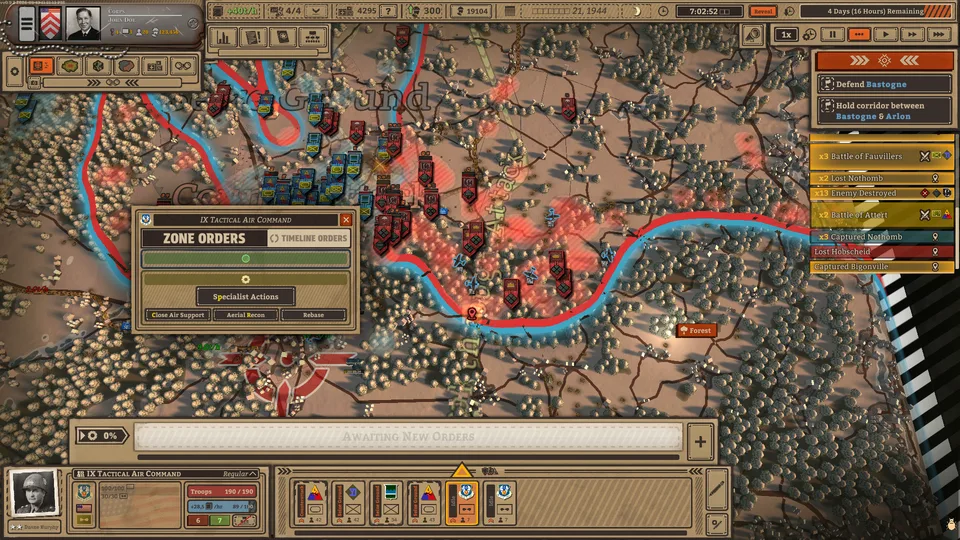
Introduction to Battleplan Gameplay and Video Content
Tip
Core Focus: Watch tactical breakdown videos to understand how to draw multi-stage offensives directly on geographic maps.
Next Step: Examine tutorial missions like Exercise Tiger and Exercise Fabius to learn basic drills before tackling major historical campaigns.
When searching for battleplan videos, players are typically looking for practical visual guides, campaign walkthroughs, and deep dives into the complex mechanics of real-time strategy wargames. Battleplan, developed by Foolish Mortals Games Inc. and published by Slitherine Ltd. on the Steam platform, simulates massive World War II battles on the Western Front second by second. Watching recorded gameplay and community tutorials helps players grasp how high-level orders translate into autonomous company behavior across real-world geographic data.
Video demonstrations prove particularly helpful for mastering the game's unique drawing mechanics, supply line upkeep, and chain-of-command structuring. Rather than manually micro-managing every single squad, players draw elaborate, multi-step plans directly onto the map. First-look videos and tactical tutorials break down how these orders execute over hours and days, providing clear examples of how to transition from basic training drills to full-scale historical engagements like the battles for Cherbourg or Caen.
Understanding Basic Drills: Exercise Tiger and Tactical Planning
Select the Objective: Click on map locations such as Exercise Tiger or Exercise Fabius to review historical context and mission parameters.
Draw Regimental Plans: Hold left-click and drag across the map to establish front lines, defense zones, and tactical parameters (such as balanced hold or seize ground).
Execute and Monitor: Click the execution button to let your regiment carry out orders while monitoring supply meters and morale statistics on the bottom interface.
Community gameplay videos frequently highlight early tutorial missions as essential stepping stones for new players. In exercises modeled after historical training drills, video creators demonstrate how to construct formations, assign officers with specific traits (such as reliability or defensive bonuses), and issue basic orders like assembling, seizing ground, executing artillery barrages, and performing breakthroughs.
According to community reports and gameplay observations, one of the most common pitfalls for beginners is drawing overly massive single zones rather than splitting forces into distinct regimental plans. Video guides illustrate that breaking your army into structured zones prevents units—such as vulnerable artillery or anti-tank guns—from accidentally drifting to the front lines unsupported. By observing how experienced players establish reserve troops and adjust tactics dynamically, newcomers learn how to maintain solid defensive lines before transitioning to offensive maneuvers.
Mastering Logistics, Supply Lines, and Encirclements
Supply Line Management
Keep a close eye on the blue and red supply indicators. Green numbers signify that a unit receives more supply than it consumes, while red indicates critical shortages that lead to attrition, desertion, and eventual surrender.
Encirclement Tactics
Use encirclement orders to completely cut off enemy divisions from their rear support. Once surrounded, enemy morale plummets rapidly, making it significantly easier to capture towns and secure supply hubs.
Managing logistics is a defining feature showcased in advanced Battleplan video guides. As armies advance further away from their initial supply depots, supply lines stretch thin. Video demonstrations emphasize the necessity of switching to the supply map view to monitor flow rates and place new supply depots strategically along major roadways.
When confronting heavily fortified enemy positions, direct frontal assaults often result in heavy casualties and stalled offensives. Content creators frequently demonstrate advanced tactics, such as utilizing engineer units to clear minefields, executing preparatory artillery bombardments, and drawing encirclement areas to starve opposing forces. By watching these tactical breakdowns, players learn how to isolate enemy headquarters, cut off their supply hubs, and systematically dismantle enemy resistance without wasting valuable manpower.
Managing the Chain of Command and Officer Veterancy
Customize your order of battle by merging divisions into corps or splitting units down to individual companies.
Hire and fire division officers, paying close attention to their unique traits, damage modifiers, and movement speed effects.
Keep headquarters protected in the rear; if an HQ takes heavy casualties, its commanding officer risks permanent injury or death, paralyzing the entire group.
An intricate aspect of the game explored in depth through tutorial videos is the customization of the chain of command. Players are not locked into rigid structures; instead, they can merge different divisions—such as combining an armored division with infantry—or split units apart to suit specific tactical requirements.
Video walkthroughs regularly point out that officers play a pivotal role in unit effectiveness. Each officer brings distinct traits that influence defense ratings, firepower, and speed. Keeping these officers alive allows them to gain veterancy over the course of a campaign, though players must remain vigilant. Because headquarters act as vital logistical anchors behind the front lines, failing to protect them from enemy breakthroughs can result in the permanent loss of key leadership, temporarily crippling regional command capability.
Utilizing Air Support and Historical Reconnaissance
Beyond ground combat, detailed video guides cover the integration of powerful air support assets unlocked later in campaigns. Players gain access to reconnaissance flights, fighter-bombers, and heavy bomber formations capable of softening up enemy fortifications before ground troops make their push.
Furthermore, video content underscores the educational value built into the game's world. Because battlefields are modeled using real-world geographic data and historical photos, players can examine geo-tagged media at the exact locations where historical events occurred. Reviewing these multimedia elements through gameplay videos enhances both tactical understanding and historical appreciation for the Western Front campaigns of 1944 onward.
Frequently Asked Questions
Where can I watch official trailers and gameplay videos for Battleplan?
You can view official trailers, developer updates, and community broadcasts directly on the Battleplan Steam Store Page.
What system requirements are needed to run Battleplan smoothly?
Minimum requirements include a 64-bit Windows 10/11 operating system, 4 GB of RAM, and a DirectX 11 compatible graphics card such as an Nvidia GeForce GT 1030 or AMD Radeon RX 460, with 8 GB of available storage space.
Are missions played in real-time or turn-based?
Missions simulate massive month-long battles second by second in real-time, but players retain full control with the ability to pause, play at normal speed, or use fast-forward controls at will.