Battleplan Reddit Community Insights & Real-Time Strategy Guide
Explore community discussions, Reddit player experiences, and tactical guides for Foolish Mortals Games Inc.'s grand WWII strategy title, Battleplan.
Published: Battleplan Wiki Editorial Team
Table of Contents
Understanding the Battleplan Experience
When diving into community discussions and player forums regarding grand strategy titles, finding genuine tactical breakdowns can sometimes be challenging. While traditional forums and community hubs often debate historical accuracy and interface hurdles, understanding how the game translates massive month-long engagements into second-by-second simulations helps set proper expectations. Developed by Foolish Mortals Games Inc. and published by Slitherine Ltd., Battleplan tasks you with acting as a high-level general rather than micromanaging individual soldiers.
For those looking to get the most out of their campaigns, exploring how the community approaches army building, logistics, and planning phases provides an essential edge. Whether you are attempting to break through heavily fortified ports like Cherbourg or coordinating complex operations like Market Garden, mastering the core mechanics requires patience and a solid grasp of supply lines. You can view the official game page and check system requirements directly on the Battleplan Steam Store Page.
Community Insights and Player Strategies
Managing Corps and Divisions Effectively
According to player experiences shared across strategy gaming communities, building your initial order of battle requires careful attention to unit composition. Avoid spreading your infantry too thin across large frontlines; instead, concentrate forces to create powerful breakthrough corridors while utilizing reserves to plug gaps.
Community discussions frequently highlight the stark contrast between the administrative setup phase and the chaotic reality of live combat execution. As noted by early reviewers and strategy enthusiasts, the game functions much like an intense historical simulation where minor planning oversights compound over weeks of simulated combat.
Players note that utilizing the standard planning mode—which limits your major strategic revisions to daily intervals or emergency sessions—creates a thrilling sense of tension. If you prefer a more traditional real-time approach, the game allows live order adjustments, though veteran commanders suggest that trusting well-drawn initial plans usually yields cleaner execution.
Audit Supply Lines: Ensure your advancing divisions maintain a secure connection to supply depots before pushing deep into enemy territory.
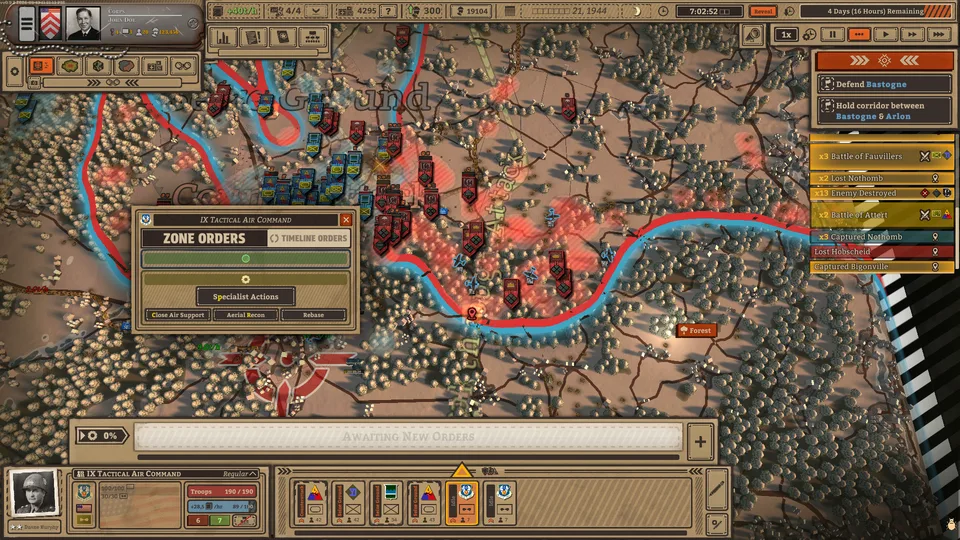
Leverage Air Support: Utilize recon, fighter-bombers, and heavy bombers to soften up entrenched enemy positions before launching set-piece attacks.
Rotate Wounded Units: Pull back battered divisions to let them rest, recuperate, and maintain veterancy levels rather than feeding them into hopeless attrition battles.
Navigating Historical Campaigns and Logistics
One of the most discussed aspects within strategy communities is how logistical depth dictates operational success. Cutting off enemy supply lines and protecting your own fuel and ammunition routes forms the backbone of any successful campaign on the Western Front.
When attempting large-scale historical operations, such as squeezing the Wehrmacht out of the Cotentin peninsula or pushing toward Arnhem, logistics will often make or break your strategy.
Step-by-Step Tactical Planning Approach
Initial Bureaucracy: Configure your army builder carefully, choosing whether to employ realistic units and assigning officers based on their specific personality traits.
Draw Directives: Use the map drawing tools to outline multi-step, multi-unit plans, establishing clear objectives for infantry, tanks, and artillery.
Execute Preparatory Bombardments: Before ordering full-scale assaults, weaken fixed defenses using coordinated artillery strikes from elevated terrain positions.
Monitor and Adapt: Watch your officers carry out orders autonomously while keeping a close eye on supply corridors to prevent your vanguard from becoming isolated and surrounded.
Common Strategic Pitfalls and Lessons Learned
Community reports and post-action debriefs from players emphasize several frequent mistakes made during extended campaigns. Overextending armored columns without securing flank protection is a classic recipe for disaster, frequently leading to localized encirclements reminiscent of historical bottlenecks.
Furthermore, players should be mindful of interface challenges when managing large corps and transferring companies across distant divisions. While clicking on units on the user interface will snap the camera to their location, maintaining fluid control during massive engagements requires careful map navigation. If you encounter rare stability issues or performance stutters during prolonged multi-week missions, community troubleshooting suggests that quick-saving, reloading the mission, or performing a game restart generally resolves memory-related slowdowns.
By approaching each historical scenario with a focus on deep preparation, robust supply management, and realistic expectations of unit autonomy, you can transform chaotic battlefield setbacks into hard-fought strategic victories.