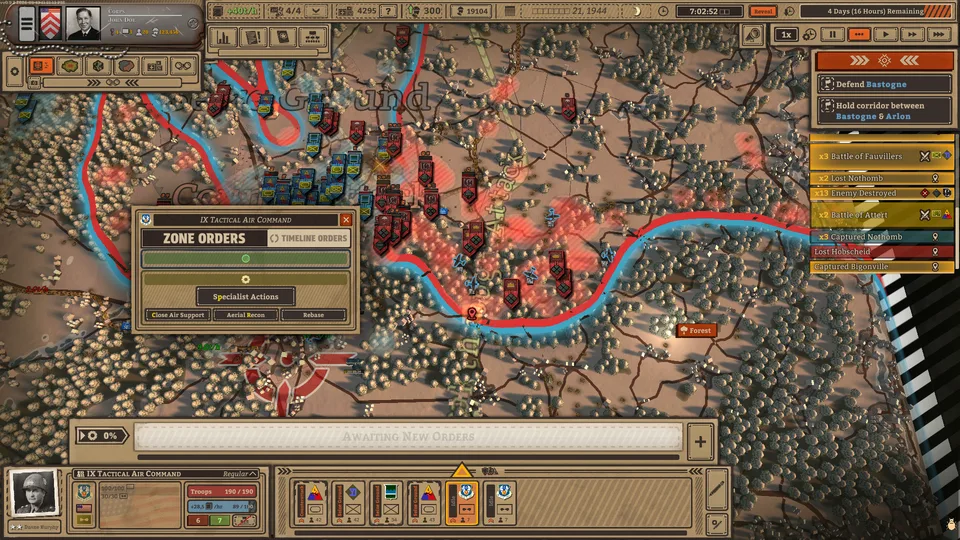
Battleplan Strategy Guide: Mastering Operational Command and Tactics
Learn how to master the operational mechanics in Battleplan, the WWII RTS where you act as HQ. Get essential tips on logistics, unit autonomy, and planning.
Published: Battleplan Wiki Editorial Team
Table of Contents
Defining the Battleplan Experience
Battleplan represents a distinct shift in the World War II real-time strategy genre. Rather than placing the player in the boots of a sergeant directing every individual unit's movement in a "click-frenzy" environment, the game casts you as the High Command in a general's tent. Developed by Foolish Mortals Games Inc. and published by Slitherine Ltd., this title emphasizes operational-level decision-making over tactical micromanagement.
The game’s fundamental appeal lies in its "intent-based" system. You are not manually guiding tanks; you are sketching axes of advance, defining phase lines, and managing the chain of command. When the plan is executed, your officers and companies carry out the orders autonomously. While this creates a high-level, immersive simulation of warfare, it also introduces a specific set of challenges for new players who are accustomed to having total control over every unit's positioning at every second.
According to community feedback and early hands-on reports, the game is highly rewarding for players who enjoy "operational thinking"—focusing on tempo, logistics, and making calculated tradeoffs under pressure. However, it requires a mindset shift: you must learn to accept that your units possess initiative, and your primary role is to set the stage for their success rather than reacting to every skirmish on the front line.
Mastering the Planning Layer
The "planning layer" is the heart of Battleplan. It is here that you sketch your operation, defining main pushes, supporting attacks, and defensive holds. Understanding how to use the drawing tools effectively is the single most important skill for a new player.
As noted by players during initial hands-on previews, the initial experience with drawing lines can feel awkward. The game does not simply treat these lines as paths; they represent "commitment." If you draw a breakthrough arrow, your units interpret it as an intent to push forward, which can lead to overextension if not supported correctly.
How to Execute Effective Operational Plans
Assess the Terrain: Examine the map for high ground and natural chokepoints. Use real-world elevation data to position your artillery effectively.
Sketch Intent, Not Paths: Use the drawing tools to indicate the goal of the movement (e.g., "capture this town" or "hold this line") rather than trying to micromanage the exact route.
Layer Your Defense: Instead of pushing everywhere, create structured, layered defensive lines. This forces the enemy to exhaust themselves against prepared positions.
Prepare the Battlefield: Utilize preparatory bombardments and air support before the main assault. Softening the target is crucial; rushing headlong into a wall will result in heavy casualties.
Monitor Momentum: Treat your momentum as a resource. Once a breakthrough is achieved, pause or slow down to re-evaluate the supply situation before pushing further.
Logistics: The Lifeblood of Your Army
In Battleplan, your ability to maintain an offensive is directly tied to your logistics. You cannot simply steamroll the enemy; you must manage supply lines that are realistically simulated based on terrain and control.
If your units push too far without securing their rear, they will run low on supplies, leading to stalled offensives and vulnerability. The game challenges you to "starve the enemy" by cutting their supply lines while ensuring your own depots are secure.
Tip
Don't Ignore the Supply Map: Always keep an eye on your supply flow. If your units are flashing warnings or slowing down, it is usually a sign that your reach has exceeded your logistical grasp. Pull back, regroup, and establish a new supply depot before continuing the push.
The importance of logistics is further emphasized by the "Army Builder" feature, which allows you to customize your order of battle. While it is tempting to focus purely on firepower, ensuring you have the necessary support units—engineers, scouts, and artillery—is what keeps the supply lines flowing and the front line stable.
Navigating the Learning Curve and UI
One of the most discussed aspects of Battleplan among early players is its learning curve. The game provides a wealth of information, which can sometimes lead to an overwhelming UI, especially during the heat of a chaotic battle.
Community reports suggest that the game’s "information hierarchy" can be a hurdle. When the front line collapses or a breakthrough happens, you may be flooded with notifications. To succeed, you must learn to distinguish between urgent disasters and minor annoyances.
Warning
Avoid "Click-Frenzy" Habits: If you try to play Battleplan like a traditional RTS by constantly selecting and moving units individually, you will likely find the experience frustrating. The game is designed for you to issue high-level orders and trust your AI officers. If the AI deviates from your plan, check your supply lines or the officers' veterancy/quirks before assuming the game is broken.
If you find yourself struggling, remember that you have the ability to control time. Use the pause function liberally. Battleplan is not a game of reflexes; it is a game of analysis. Slowing down the game when contact turns into a "proper scrap" allows you to assess the situation, adjust your orders, and let your chain of command handle the tactical execution.
Key Features Checklist
To help you get started, here is a checklist of the core systems you should prioritize mastering during your first few missions.
[ ] Chain of Command: Ensure your divisions are properly structured into corps and battalions.
[ ] Officer Management: Hire, fire, and promote officers. Keep them alive so they gain veterancy and unique quirks.
[ ] Air Support: Integrate recon, fighter-bombers, and heavy bombers into your operational plan.
[ ] Historical Context: Examine geo-tagged historical photos provided in-game to learn about the battles you are fighting.
[ ] Pause/Fast-Forward: Use the time controls to manage the pace of month-long battles.
Community Insights: The Reality of Command
The reception of Battleplan on Steam has been categorized as "Mixed" (67% positive as of the most recent data). This reflects the game's niche appeal. It is not designed for every RTS player; it is designed for those who want to simulate the "General's tent" experience.
Players who enjoy the game often cite the "chaos and drama" of the battles as the highlight. The simulation of heroic units holding a line against impossible odds, or the sudden panic retreat when a plan falls apart, creates memorable moments that are distinct from standard strategy games.
Conversely, the criticism often centers on the lack of clarity in the tutorial and the difficulty of understanding the AI's logic when it deviates from your orders. If you are the type of player who demands full, direct control over every unit at all times, you may find the autonomy of your AI officers annoying. However, if you are looking for a game that rewards operational planning and strategic patience, Battleplan offers a unique experience that is currently quite rare in the market.
Frequently Asked Questions
Can I control units directly in Battleplan?
While you provide the high-level intent, units operate with a degree of autonomy. You are the HQ, not a sergeant. You draw the plans, but your officers and companies execute them based on their own logic and current state (like supply and veterancy).
Is Battleplan a historical game?
Yes, the game is set on the Western Front, 1944 onwards. It uses real-world geographic data for its battlefields and includes geo-tagged historical photos and videos to provide context for the battles.
How long do missions last?
Mission lengths in Battleplan are quite extensive, ranging from one week to a month of simulated time. The game features time controls (pause, real-time, fast-forward) to help you manage these long durations.
Why are my plans failing?
If your plans are failing, check three things: Logistics (are your units supplied?), Support (did you soften the enemy with artillery or air power?), and Commitment (are you pushing too hard without a reserve?). Often, the issue is an overextended front line rather than a lack of unit strength.