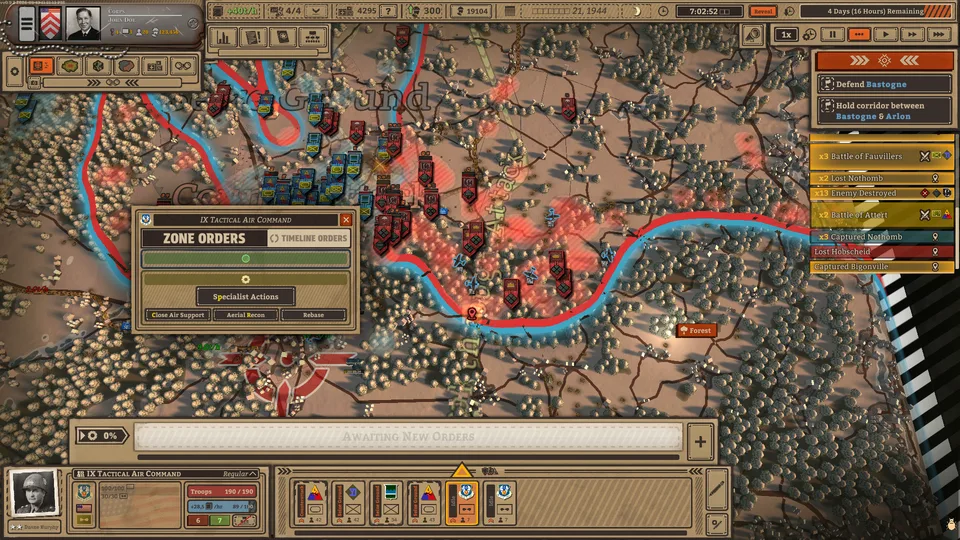
Learn how to master Battleplan's unique tactical mechanics, from drawing intuitive battle plans to managing complex supply lines and chain of command.
Published: Battleplan Wiki Editorial Team
Table of Contents
Understanding the Fundamentals of Battleplan
Battleplan is not your typical real-time strategy game where you micromanage individual soldiers. Instead, it focuses on high-level command, forcing you to think like a theater commander. Players are tasked with fighting massive, month-long campaigns on the Western Front, beginning from 1944. The simulation depth is significant, tracking units second-by-second across terrain modeled from real-world geographic data.
To succeed, you must move beyond simple "attack-move" commands. The game requires you to draw your intentions directly onto the map. Whether you are executing a defensive-in-depth strategy or preparing for a multi-stage breakthrough, the game’s engine interprets your drawings and coordinates your units to carry them out autonomously.
Master the Art of Regimental Planning
The core of your tactical success lies in the "regimental plan" system. Rather than moving units individually, you group them into formations and draw areas of operation.
Define the Zone: Hold the left mouse button to draw an area between your front line and the objective.
Assign Tactics: Click on the zone name to toggle between presets like "Seize Ground," "Balanced Hold," or "Breakthrough Attack."
Refine Shape: Use right-click and drag to adjust the boundaries of your plan as the situation on the battlefield evolves.
Execute: Always confirm the execution of your plan; units will not move or engage effectively until the order is finalized.
According to player experience, creating multiple, smaller zones for specific regiments is more efficient than one massive zone. This prevents your units from clumping together and allows for more intricate maneuvers, such as splitting engineers to clear minefields while your infantry focuses on holding key terrain.
Logistics and Supply Chain Management
One of the most critical aspects of Battleplan is the simulation of supply lines. If your units push too far from their supply depots, their combat effectiveness will plummet, leading to attrition and potential surrender.
Tip
Always monitor the blue supply bar in the unit stats panel. If a unit's supply intake (green number) is lower than its consumption, you must pull back or establish a new supply depot nearby.
When facing a fortified enemy, the most effective strategy is often "encirclement." By drawing an order that wraps around the enemy's position, you can cut off their supply lines. Once a unit is isolated, their morale will collapse, and they will start taking attrition damage. At this point, simply waiting for the next day allows the game's simulation to resolve the encirclement, often forcing a surrender without a costly head-on assault.
Customizing Your Chain of Command
The game allows for deep customization of your army structure. You can merge divisions into larger corps or split them down to individual companies to better suit your tactical needs.
Unit Specialization
Infantry: The backbone of your army, best for holding ground and defense. They benefit from fortifications but are slow on the offensive.
Artillery: Essential for softening up fortified enemies. They provide massive stat penalties to targets but are highly vulnerable in close-quarters combat.
Engineers: Crucial for clearing minefields and building improved fortifications. Use them to pave the way for your mechanized units.
Scouts: Provide essential intel, reveal hidden enemy positions, and grant movement speed bonuses to nearby friendly units.
A common mistake new players make is ignoring the officer system. Each officer has unique traits and can be leveled up. Keep your headquarters safe; if an HQ unit takes heavy casualties, there is a risk of permanently losing your officer, which can temporarily paralyze the entire formation.
Frequently Asked Questions
Can I play in real-time or do I have to pause?
The game is designed as a real-time simulation, but you can pause, play in real-time, or use fast-forward at any time. This flexibility is vital when you are waiting for a plan to execute over several hours of simulated time.
Why are my units retreating?
Units retreat when their morale hits zero. This usually happens if they are underpowered, lack supply, or are facing superior enemy fortifications. If your attack is failing, don't hesitate to retreat early to preserve your troops for a better-planned assault.
How do I handle night missions?
By default, units will stop and rest during the night to avoid risky maneuvers in low visibility. You can adjust time controls in the menu, but generally, the night is best used for regrouping, digging in, or waiting for supply lines to stabilize.
Final Tactical Advice
Battleplan rewards patience and preparation. Before launching a major offensive, ensure your artillery has softened the target and your scouts have tagged enemy positions. Always keep an eye on the terrain; forests and cities provide defensive bonuses, while swamps and beaches can leave your troops extremely vulnerable.
For those looking to dive deeper, the game includes a codex in the bottom right corner when you zoom in on a unit. Reading this is highly recommended, as it provides specific details on unit roles, behaviors, and combined-arms bonuses that are essential for mastering the more complex, month-long missions. You can find more information and join the community discussions on the official Steam page.