Battleplan Developer Interview: Insights into WWII RTS Strategy and Design
Discover how Foolish Mortals Games is reshaping the WWII RTS genre in our exclusive Battleplan developer interview, covering mechanics, logistics, and design.
Published: Battleplan Wiki Editorial Team
Table of Contents
Evolution of Strategy: From Timeline to Zone Orders
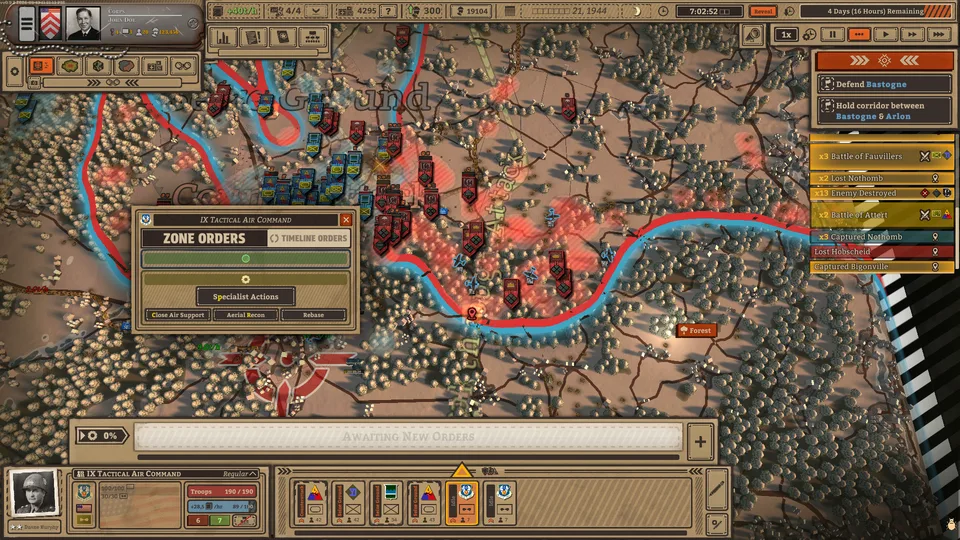
In our recent sit-down with Michael Long, CEO and lead developer at Foolish Mortals Games Inc., we explored the innovative design choices behind Battleplan. One of the most significant changes noted during the development process involved the command interface. Early feedback from the demo highlighted that the original "timeline orders"—a linear system where units executed tasks one after another—felt restrictive when players attempted to manage complex regimental maneuvers.
To address this, the team introduced "zone orders." This system allows players to draw areas on the map and assign units to them, facilitating simultaneous movement and combat. According to community reports from the beta phase, this shift was pivotal in making the game more intuitive. It allows for regimental-level tactical flexibility without requiring the player to micromanage individual battalions, effectively bridging the gap between grand strategy and tactical real-time simulation.
Mastering Logistics in WWII Combat
Logistics serve as the heartbeat of Battleplan. Unlike traditional RTS titles that might track fuel, ammunition, and manpower separately, this game simplifies these into a single "supply" metric. However, simplicity in UI does not mean a lack of depth. As Michael Long explained, supply levels are tied directly to the distance between a division and its nearest supply depot, with terrain types like forests and swamps acting as modifiers that slow down delivery trucks.
Tip
To maintain combat effectiveness, avoid pushing your armored divisions too far ahead of your supply lines. Tanks consume supplies significantly faster than infantry; plan for a cycle of two to three days of active fighting followed by a rest period to resupply.
The strategic importance of logistics also extends to offensive maneuvers. Players can utilize "encirclement" orders to cut off enemy supply lines, causing units to suffer combat penalties, desert, or surrender. This creates a rewarding gameplay loop where outsmarting the enemy's logistics is often more effective than a direct, high-casualty frontal assault.
Historical Authenticity and Design Philosophy
Battleplan draws heavy inspiration from the real-time simulation aspects of Steel Division and the grand scale of Hearts of Iron 4. However, the developers have gone a step further by integrating real-world geographic terrain and historical archives. By downloading map data from OpenStreetMap and processing it through custom scripts, the team ensures that the rivers, forests, and towns in the game mirror their real-life counterparts during the Normandy campaign.
The game also features a unique emotional layer: players are tasked with writing letters home for fallen officers. While this has no mechanical impact on the game's outcome, developers noted that it has provided a deeply resonant experience for players, grounding the "virtual soldiers" in a human context.
Historical Realism: Unit positions and officer biographies are based on actual historical research.
Customization: Players can rename officers, swap portraits, and customize the chain of command (order of battle) to suit their tactical preferences.
Flexibility: The "skip mission" button and fully customizable difficulty sliders ensure that the campaign remains accessible to players who want to focus on the narrative rather than extreme challenge.
Readiness vs. Planning: Defining the Gameplay Loop
A major design hurdle for the team was deciding how and when players should issue orders. The "planning phase" model, which restricted command inputs to once per day, was initially tested but felt too slow for some players. The team eventually pivoted to the "readiness" system.
In this current model, players can issue orders at any time, but those orders require time to be processed by the AI officers. If you execute a plan immediately, your units may suffer from organizational penalties. By allowing the plan to "stew" for 6 to 12 hours, you gain significant tactical bonuses. This system rewards patience and foresight, mirroring the reality of historical military operations where command decisions took time to propagate through the chain of command.
Future Roadmap and Multiplayer Considerations
Regarding the future of Battleplan, the developer was clear about current priorities. Online multiplayer will not be available at launch. The team is currently focused on refining the core single-player experience and will evaluate post-launch support based on community demand.
Will there be a map editor for players?
Currently, no. The technical process for creating maps involves complex Python and Blender scripts that take hours to run, making it difficult to implement an in-game editor for launch. The team is open to community feedback regarding this for post-release updates.
How does the AI handle difficulty?
The AI does not "cheat" by spawning extra resources or having perfect vision. Instead, it uses historical starting positions and initial intelligence. Difficulty is managed through player-facing sliders, allowing you to adjust enemy strength or even remove the fog of war.
As the studio prepares for the game's release, the focus remains on innovation within the RTS genre. By encouraging players to step out of their comfort zones, Battleplan aims to offer a fresh perspective on operational warfare, one that rewards strategic planning as much as tactical execution.