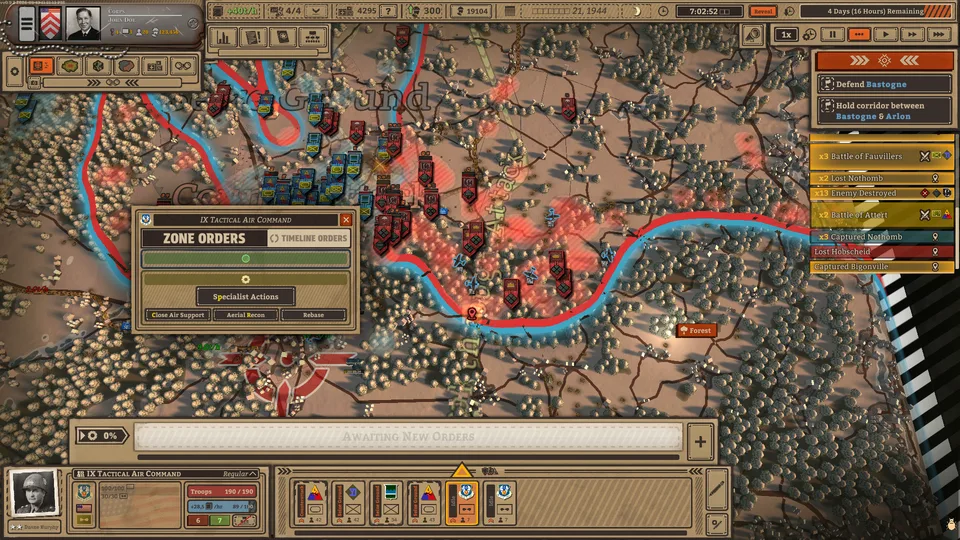
Battleplan Allied Forces Gameplay Features and Real-Time Strategy Mechanics
Explore the tactical depth of Battleplan, a historical World War II real-time strategy game featuring massive map simulations, realistic army chains of command, and direct tactical drawing tools.
Published: Battleplan Wiki Editorial Team
Table of Contents
Introduction to Battleplan Strategy Mechanics
When diving into historical real-time strategy games, commanders often look for depth, geographical accuracy, and realistic command structures rather than fast-paced micro-management. Developed by Foolish Mortals Games Inc. and published by Slitherine Ltd., Battleplan on Steam offers a unique simulation approach to World War II conflicts on the Western Front from 1944 onward. Rather than moving single units in a vacuum, players manage entire divisions through high-level tactical planning, map drawing, and logistical mastery.
Core Requirement: 64-bit Windows 10 or 11 operating system.
Hardware Baseline: Intel Celeron G4920 or AMD Athlon 200GE processor, paired with 4 GB RAM (8 GB recommended).
Graphics Support: DirectX 11 compatible card such as Nvidia GeForce GT 1030 or AMD Radeon RX 460.
Storage Space: 8 GB of available hard drive space.
Creating Elaborate Plans and Direct Map Drawing
Traditional strategy titles often rely on click-to-move waypoint systems that lack the fluidity of real military planning. In this title, players can intuitively design multi-step and multi-unit maneuvers by drawing directly on the tactical map.
Analyze the Terrain: Examine real-world elevation maps and geographic data to locate high ground for artillery placement or natural choke points.
Draw Objectives: Use the direct drawing tool on the interface map to sketch advance routes, defensive perimeters, or pincer movements.
Initiate Preparatory Actions: Order preparatory bombardments before launching large set-piece attacks to soften enemy defenses.
Execute and Monitor: Split divisions to capture multiple objectives simultaneously while subordinate officers carry out high-level commands autonomously.
Realistic Army Structure and Chain of Command
Managing troops effectively requires understanding the hierarchical modeling built into the game. Each division is structured realistically down to headquarters, regiments, battalions, and companies.
Unit Specialization
Infantry, tanks, engineers, anti-tank guns, artillery, and scouts work together as interdependent assets. Players can customize the order of battle, combine divisions into corps, or scale units down to individual companies based on operational needs.
Officer Management
Hire and fire officers for your divisions, manage their veterancy, and deal with unique officer quirks. Keep your commanders alive through intense engagements to maximize their efficiency, or risk operational friction if leadership fails.
Massive Battlefields and Real-World Geography
Strategy enthusiasts frequently debate whether map layouts feel authentic. Battleplan addresses this by constructing thousands of kilometers of terrain using actual geographic data. Every road, forest, town, and swamp mirrors its real-world counterpart.
Players must study elevation changes carefully. Positioning artillery on high ground offers distinct tactical advantages, while advancing through swamps or heavily forested regions directly impacts movement speed and combat effectiveness.
Mastering Logistics and Supply Lines
A brilliant tactical maneuver can collapse instantly if supply lines fail. The game simulates supply mechanics realistically, where terrain dictates the flow of resources to front-line units.
Tip
Starve the Enemy: Cut opposing supply paths to degrade enemy combat readiness over time.
Secure Depots: Capture supply depots dynamically during your advance to fuel ongoing operations.
Know When to Retreat: Pull battered units back when their supplies run low to prevent catastrophic encirclements and heavy casualties.
Campaign Structure and Historical Immersion
The gameplay loop centers around 10+ massive historical engagements set during the later stages of World War II in the Western Front from 1944 onward. Players can acquire powerful air support assets—including reconnaissance, fighter-bombers, and heavy bombers—to break heavily fortified enemy lines. Furthermore, the game incorporates geo-tagged historical photos and videos taken at actual locations, allowing players to connect modern strategy simulations directly with real-world history.