Battleplan Multiplayer Guide: Understanding Game Modes, Logistics, and RTS Mechanics
Discover how Battleplan handles multiplayer-style strategic depth, real-time tactical simulation, supply lines, and elaborate front-line planning on Steam.
Published: Battleplan Wiki Editorial Team
Table of Contents
Understanding Battleplan's Tactical Scope and Strategic Depth
When diving into Battleplan, players often look for traditional multiplayer matches, but the core experience focuses on an intense, simulation-heavy single-player and grand tactical framework. Developed by Foolish Mortals Games Inc. and published by Slitherine Ltd., the title drops commanders into month-long operations modeled on real-world geographic data. Rather than twitch-based micro-management, success relies on drawing elaborate multi-step offensives directly onto the map and watching your officers execute them second by second.
Community reports and gameplay breakdowns indicate that the game simulates hundreds of thousands of troops across thousands of kilometers. Every road, forest, town, and swamp mirrors its real-life counterpart. Understanding how these geographic and logistical factors intersect is vital for anyone looking to master the game's steep learning curve, whether they are holding a defensive line or executing a complex encirclement.
Core Gameplay Mechanics: Drawing Plans and Managing the Chain of Command
Assess the Terrain: Utilize real-world elevation maps and geographic data to position your artillery on high ground and identify chokepoints.
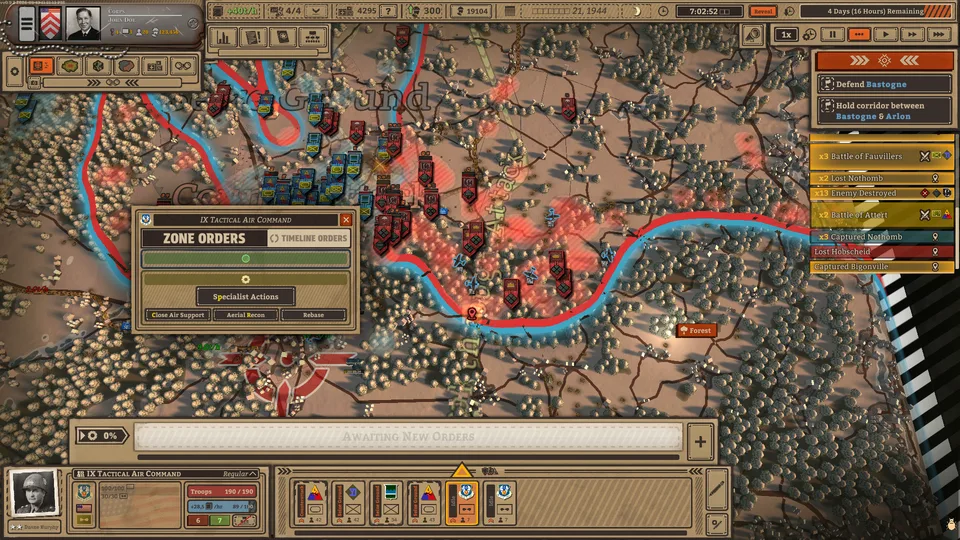
Draw Direct Orders: Instead of issuing single-unit commands, hold the left mouse button to draw operational areas, defining specific zones like seize ground, balanced hold, or breakthrough attack.
Customize the Hierarchy: Manage your order of battle by merging divisions into corps or splitting units down to individual companies and attaching specialized support.
Execute and Monitor: Let your officers and companies carry out plans autonomously while you monitor morale, casualty counts, and front-line stability.
One of the defining features of the game is its planning interface. Instead of issuing isolated move orders, players draw boundaries directly onto the tactical map. According to player experiences from early community streams, creating a regimental plan splits the target area into distinct zones managed by separate regiments. This prevents units from clustering awkwardly and ensures that infantry, armor, and support elements advance in a coordinated front.
Managing your chain of command is equally important. You can hire and fire division officers, each possessing unique traits like "reliable" or specific tactical bonuses that boost infantry defense or firepower. However, keeping headquarters safe is critical; if an HQ takes heavy casualties, the commanding officer can be permanently wounded or killed, temporarily paralyzing the entire formation and leaving subordinate units vulnerable.
Mastering Logistics and Supply Lines
Warning
Pushing too far past your supply network will leave your divisions starved of resources, leading to severe combat penalties, attrition damage, and eventual surrender. Always secure supply depots and hubs before launching deep offensives.
Logistics form the heartbeat of any successful campaign in the game. Units require a constant stream of supplies to maintain morale, fight effectively, and avoid attrition. If your advance outpaces your supply corridors, the UI will reflect this change, shifting supply indicators from green to red.
To remedy this, players must establish forward supply depots near reserve areas and roads. Cutting enemy supply lines is just as vital as protecting your own. By surrounding enemy divisions and capturing their hubs, you can starve them of resources, drastically lowering their morale and forcing them to surrender when their supply bars hit zero.
Utilizing Combined Arms and Specialist Actions
Success on the battlefield requires more than just massing infantry. Standard divisions comprise a mix of infantry, artillery, engineers, scouts, anti-tank guns, anti-air guns, and headquarters. Each unit type brings distinct combined arms bonuses to nearby allies. For example, scouts increase movement speed, while infantry provide defensive boosts to adjacent units.
Infantry & Fortifications
Relatively cheap to field and exceptional at holding ground, infantry automatically dig fortifications when idle. They require artillery support to crack heavy enemy defenses.
Artillery Batteries
Capable of long-range devastation, artillery units can soften up fortified positions through preparatory bombardments before a major assault, though they remain vulnerable in close quarters.
Engineers & Scouts
Scouts autonomously probe ahead to reveal enemy positions and tag routes, while engineers lay and clear deadly minefields and construct improved defenses.
Specialist actions add another layer of depth to set-piece battles. Before launching an assault on a heavily fortified town like Newton Abbott, players can queue up specialized orders such as coordinated artillery barrages or minefield clearance by engineers. Utilizing these tools prevents costly frontal assaults against entrenched positions.
Air Support and Historical Campaigns
As campaigns progress through historical Western Front scenarios starting in 1944, commanders gain access to powerful air support assets. These include reconnaissance flights to scout enemy movements, as well as fighter-bombers and heavy bombers capable of striking enemy fortifications from above.
Community feedback highlights that the game's mission design feels remarkably sandboxy despite following historical milestones. There are multiple ways to approach objectives, whether through methodical attrition, rapid armored breakthroughs, or deep encirclements. For players who enjoy deep historical immersion, the inclusion of geo-tagged historical photos and videos provides an educational layer that connects in-game battlefields directly to real-world history.
Is Battleplan a multiplayer game?
The core experience centers on single-player, historical real-time strategy campaigns simulating massive month-long operations with high-level planning.
Can I control units in real time?
Yes. The game offers time controls that let you pause, play in real time, or fast-forward at will, while units execute your drawn plans autonomously.
How do I prevent my supply lines from failing?
Keep your advancing units close to active supply depots, build new depots along secure roads as you push forward, and cut enemy supply routes to starve opposing forces.